Jaw Pain and Restricted Movement: When to Seek an Evaluation
Chiropractic evaluation for jaw pain and restricted movement can help identify movement limits, muscle tension, and symptom patterns. Arrowhead Clinic Chiropractor Garden City evaluates the jaw, surrounding muscles, and related neck movement to determine whether TMJ treatment is appropriate and whether referral is needed.
Request an EstimateJaw pain and restricted movement can involve the temporomandibular joint, which connects the jawbone to the skull. TMJ dysfunction may affect jaw mobility, jaw muscles, facial muscles, and nearby neck muscles.
These symptoms can also relate to dental problems, injury, joint irritation, or muscle tension. We use a musculoskeletal assessment to look at how the jaw and neck move together.
Which Signs and Symptoms Should You Watch For?
Jaw-related symptoms that persist, interfere with eating, or limit mouth movement warrant an evaluation. A symptom can occur alone or alongside other signs of jaw or facial strain.
We ask when each symptom began and what activities make it better or worse. That information helps us decide whether a chiropractic evaluation is a suitable next step.
What Common Causes Can Contribute to TMJ Symptoms?
Several habits, injuries, and changes in the jaw can contribute to TMJ symptoms. Identifying the likely cause helps guide the evaluation and care plan.
We consider these factors along with symptom history and movement findings. The same symptom may need different care when its cause is dental, traumatic, inflammatory, or musculoskeletal.
When Should Jaw Pain or Limited Movement Be Evaluated?
Jaw pain or limited movement should be evaluated when symptoms persist, worsen, follow an injury, restrict eating, or occur with swelling or significant locking.
Persistent jaw pain, restricted jaw movement, difficulty chewing, or repeated jaw locking can affect daily activities. Facial swelling may point to a dental or medical concern that needs prompt attention.
We evaluate movement patterns and surrounding tissues, then explain whether our care fits the findings. Dental evaluation or medical referral may be needed when symptoms suggest a tooth problem, infection, significant injury, or another condition outside our scope.
Can Chiropractic Care Help With TMJ Symptoms?
Yes, chiropractic care may help some TMJ symptoms when jaw discomfort is related to musculoskeletal tension or movement restrictions, but evaluation determines whether chiropractic treatment is appropriate.
Our chiropractic evaluation considers jaw mobility, neck alignment, facial muscles, and nearby tissues. When the findings support care, our approach may address movement restrictions and muscle tension as part of a focused TMJ treatment plan.
We do not assume that every jaw symptom is a musculoskeletal condition. We use the examination findings to set treatment goals and identify when referral is the safer choice.
What We Check During a TMJ Evaluation
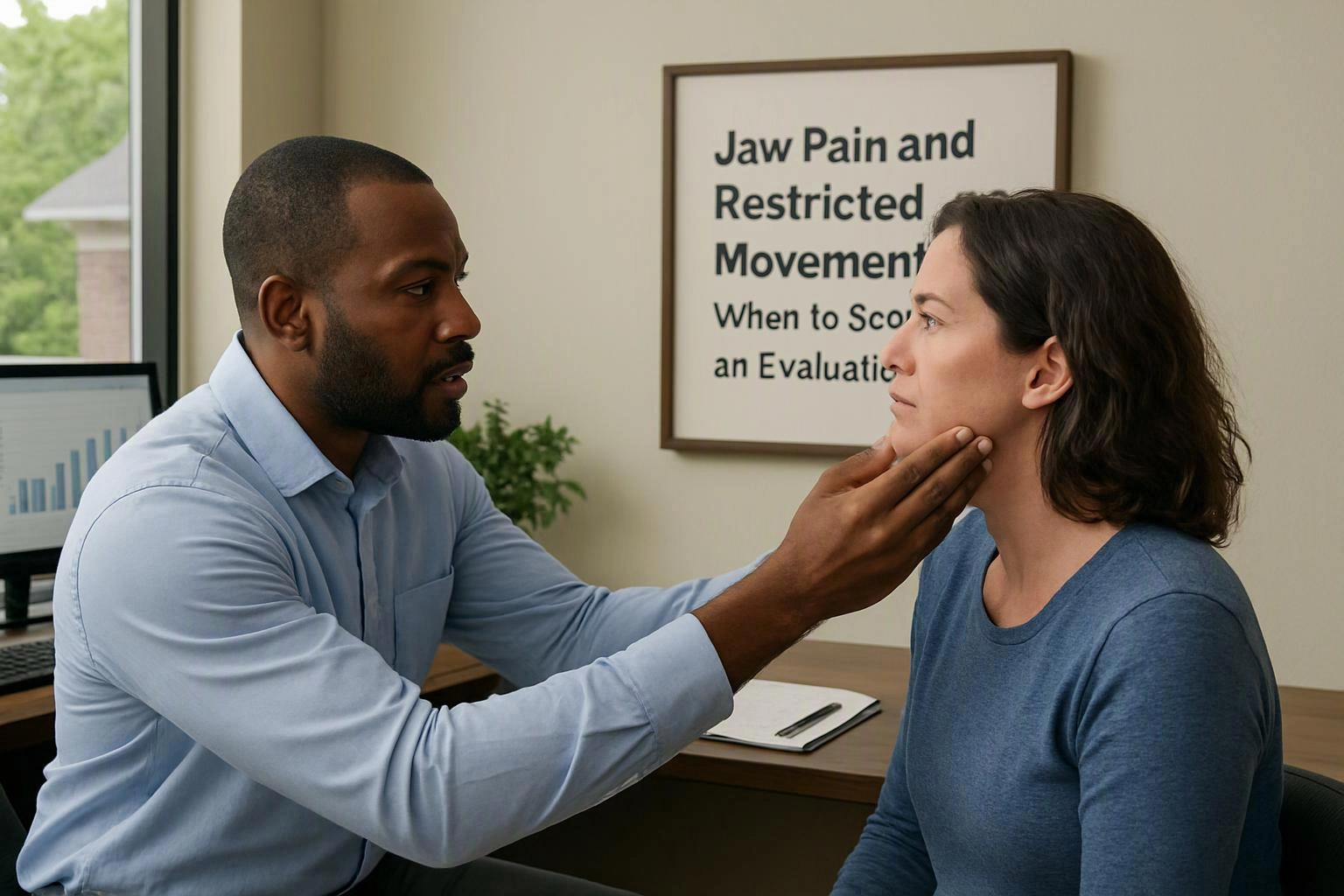
Jaw range of motion, jaw tracking, muscle tenderness, neck movement, posture, and symptom history guide our TMJ evaluation.
We observe how the jaw opens and closes and whether movement is smooth or restricted. We also assess neck movement and posture because neck tension can influence jaw discomfort in some people.
When TMJ Symptoms Need Another Type of Care
Jaw symptoms need another type of care when they suggest infection, severe swelling, a significant jaw injury, or a dental cause.
We may recommend a dentist for tooth-related concerns or an oral and maxillofacial specialist for complex joint or injury concerns. A primary care clinician may be appropriate when symptoms involve broader medical issues.
How Can You Reduce Jaw Strain Between Evaluations?
Simple changes can reduce jaw strain while you arrange an evaluation. These steps do not replace care when symptoms persist, worsen, or limit eating.
We can discuss these habits during an evaluation and relate them to your symptom pattern. Stop any self-care activity that increases pain or locking.
What Should You Ask Before Considering Chiropractic Care for Jaw Pain?
Ask how the evaluation will identify the source of jaw symptoms, what treatment will address, and when another clinician should be involved.
We explain our findings in plain language and connect them to practical treatment goals. You should understand the care plan before deciding whether to continue.
How Do You Decide Whether TMJ Treatment Is Appropriate?
TMJ treatment is appropriate when a clinical evaluation connects the symptoms to movement restrictions, muscle tension, or another musculoskeletal finding that our care can address.
We compare the examination findings with your treatment goals and symptom history. If the findings do not support chiropractic care, we explain the need for dental, medical, or specialist referral.
To discuss your symptoms with our team, contact Arrowhead Clinic Chiropractor Garden City. Our evaluation helps create a care plan that matches your needs and keeps referral decisions clear.
Questions About Jaw Pain and Restricted Movement
Can TMJ symptoms go away on their own?
Some mild TMJ symptoms may settle when jaw strain decreases, but persistent or worsening symptoms need evaluation. Arrowhead Clinic Chiropractor Garden City can assess movement and symptom patterns to determine whether care or referral is appropriate.
Should I see a dentist or chiropractor for jaw pain?
A dentist is important when jaw pain may involve teeth, bite changes, or infection, while chiropractic evaluation may help when symptoms appear musculoskeletal. We can assess movement and explain when dental care or another referral is needed.
Can neck tension contribute to jaw discomfort?
Yes, neck tension can contribute to jaw discomfort when nearby muscles and movement patterns affect jaw function. Our evaluation checks neck movement, posture, and jaw motion together.
What happens if jaw pain causes the jaw to lock?
Jaw locking warrants evaluation, especially when the mouth cannot open or close normally, eating is restricted, or swelling follows an injury. We assess the situation and recommend dental, medical, or specialist care when the symptoms exceed chiropractic treatment.
Jaw pain with restricted movement deserves a clear evaluation when it affects eating, worsens, follows an injury, or occurs with swelling or locking. Contact our team to discuss your symptoms and determine the next appropriate step.