Work-Related Back or Neck Pain: What to Track Before an Evaluation
Work-related back or neck pain is easier to evaluate when you track symptoms, work activities, limitations, and relevant records; Arrowhead Clinic Chiropractor Garden City uses that information to guide the evaluation and discuss appropriate treatment.
Request an EstimateWhy Tracking Work-Related Pain Helps an Evaluation
Tracking work-related back or neck pain helps the chiropractic evaluation connect symptoms with movements, duties, and changes over time.
A clear symptom history can show whether pain began during one event, developed after repeated tasks, or changed as work continued. We use those details to focus the physical examination and understand how the injury affects daily activities.
Notes about muscle tension, joint stiffness, sleep disruption, and movement limitation can also make the discussion more specific. A pain diary does not replace medical care, but it can help us identify useful patterns.
Before the Evaluation: Record What Happened and What Changed
Before a chiropractic evaluation, record the work event, symptom onset, and information that may explain how the injury developed.
Write notes soon after symptoms change so the details remain clear. Bring medical records that help us understand your medical history and any previous injury.
Which Symptoms Should You Track After a Work Injury?
Track pain location, symptom pattern, movement limits, radiating symptoms, numbness, tingling, weakness, and changes in daily function.
Describe whether pain is steady, intermittent, sharp, aching, burning, or linked to a specific movement. Radiating leg pain or radiating arm pain can provide important information about how symptoms travel from the spine.
Also note headaches, reduced range of motion, muscle tension, joint stiffness, and changes in sleep or routine tasks. We use these observations with the examination findings to discuss possible next steps.
During the Evaluation: Explain Your Work Demands Clearly
During the evaluation, explain how your job duties affect symptoms and which activities create functional limitations.
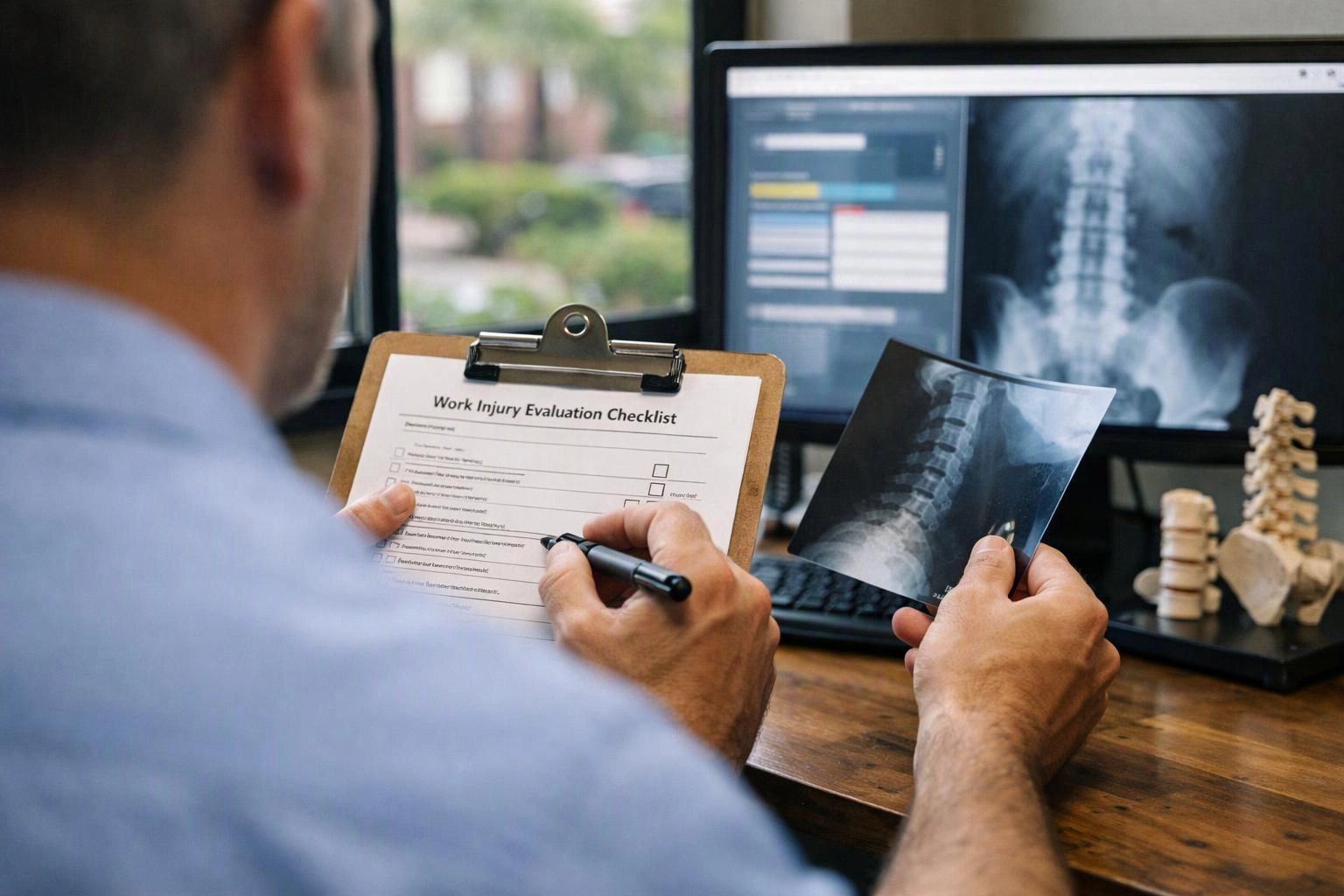
Specific details help us connect work demands with movement limitation. Include what you can do comfortably, what causes symptoms, and what you now need to avoid or modify.
How Arrowhead Clinic Chiropractor Garden City Uses Your Information
Arrowhead Clinic Chiropractor Garden City uses your symptom history, work demands, and examination findings to understand functional problems and discuss an appropriate care plan.
Our team combines your description with a physical examination and movement assessment. We look at range of motion, areas of tenderness, coordination, and signs that may relate to neurological symptoms.
Work-related injury care should reflect the person’s symptoms and job demands. We use the information you provide to discuss treatment planning, activity guidance, and whether follow-up care may be appropriate.
Our Work Injury Treatment service can be discussed as part of an evaluation when job-related pain affects your function.
After the Evaluation: Continue Tracking Recovery and Work Tolerance
After the evaluation, continue recording recovery progress, pain response, and work tolerance so changes can be reviewed during follow-up care.
Use clear notes to show which activities feel easier, which still cause symptoms, and how you respond to home care instructions. Share changes promptly when symptoms affect your ability to work or complete daily activities.
Seek Prompt Medical Evaluation for These Warning Signs
Prompt medical evaluation is important when work-related back or neck pain includes red flags that may signal a serious problem.
Do not delay care when symptoms are sudden, severe, worsening, or linked to major trauma. We can help evaluate musculoskeletal concerns, while urgent symptoms may require emergency medical attention.
What to Bring to a Work-Injury Chiropractic Evaluation
Bring your symptom notes, work-incident information, relevant medical records, imaging details, medication list, and information about your job duties.
A complete packet helps us understand the injury mechanism, symptom pattern, prior medical history, and current work demands. Include documents that explain restrictions or previous care when they are available.
Arrowhead Clinic Chiropractor Garden City reviews this information with you and uses it to guide the chiropractic evaluation. Contact our team to discuss your work-related back or neck pain and the records that may support your visit.
Useful items include a symptom diary, work incident report, medical records, imaging report, medication list, job description, and insurance information.
When back pain is the main concern, our Back Pain Treatment service can be part of the care discussion.
Arrowhead Clinic Chiropractor Garden City can help you organize the next step in evaluating a work-related injury.
Questions About Tracking Work-Related Back or Neck Pain
Should I seek chiropractic care for back pain after a work injury?
Yes, chiropractic care can be considered for back pain after a work injury when symptoms affect movement or daily function; Arrowhead Clinic Chiropractor Garden City reviews the work event, symptoms, and examination findings before discussing care.
What should I write down about neck pain before an evaluation?
Write down the neck pain location, symptom onset, pain pattern, movement limits, headaches, radiating symptoms, numbness, tingling, and activities that make the problem worse.
Can work activities make back or neck pain worse?
Yes, work activities can make back or neck pain worse when lifting, reaching, repetitive motion, prolonged sitting, standing, or awkward positioning increases strain or limits movement.
What documents are useful for a work-injury evaluation?
Useful documents include a symptom diary, work incident report, medical records, imaging report, medication list, job description, work restrictions, and insurance information.
When does work-related neck pain need prompt evaluation?
Work-related neck pain needs prompt evaluation when it includes new or worsening weakness, loss of sensation, loss of bladder or bowel control, or severe pain after major trauma.
Related Resources
Choosing a Chiropractor in Garden City: What to Compare Before Booking
Brand vs BrandBack Pain Treatment Companies Worth Comparing in Garden City (2026)
Compared ToChiropractic Adjustment or Massage Therapy for Back Pain?
Compared ToChiropractor or Physical Therapist for Back Pain? Comparing Your Options