A Checklist for Back and Neck Symptoms Related to Work
A work-related back and neck pain checklist helps you record symptoms, identify work triggers, note warning signs, and decide when chiropractic care may help. Arrowhead Clinic Chiropractor Garden City uses these details to guide back and neck treatment.
Written by Dr. NiAmber Harris
Request an EstimateWhat Does This Work-Related Pain Checklist Cover?
Work-related pain checklists cover symptoms, work triggers, movement limits, warning signs, and changes after rest or activity.
This checklist can help you track work-related back pain and work-related neck pain. It connects each symptom with the task, posture, and timing that may affect it.
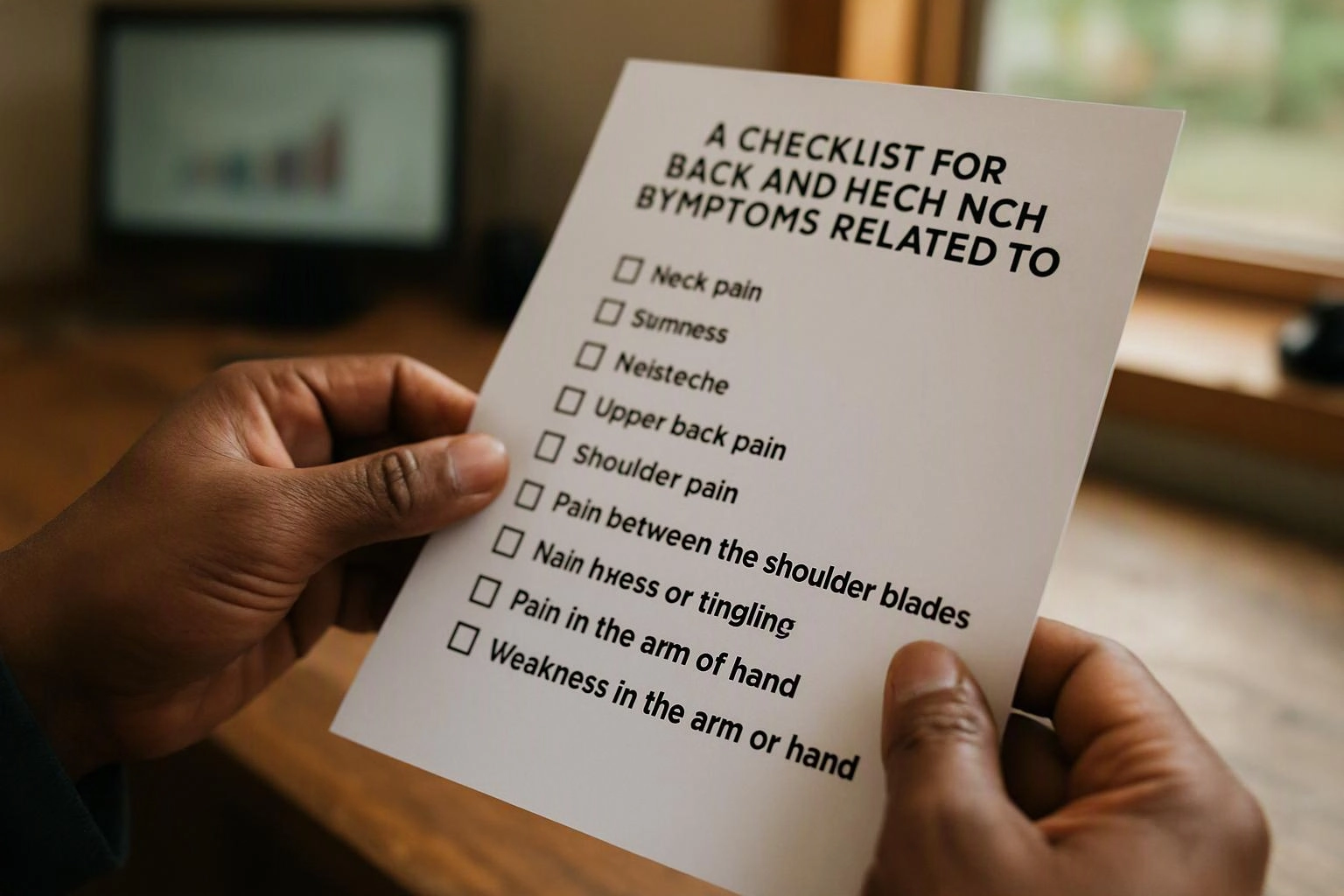
Dr. NiAmber Harris reviews these details as part of our patient education and care process. Clear symptom tracking can make a chiropractic evaluation more focused.
Before Work: Record Your Starting Symptoms
Before work, record your starting symptoms so changes are easier to notice later. Use simple words and note the pain location, pain intensity, and movement limitation.
Starting notes create a useful baseline for the workday. Bring these details to our team when symptoms continue or change.
What Work Activities May Be Contributing?
Work activities may contribute to back or neck discomfort when prolonged sitting, repeated motion, lifting, or awkward posture strains the same body area.
Prolonged sitting can keep the spine in one position for much of the day. Repetitive motion can also stress the back muscles, neck, shoulders, and joints.
Lifting, bending, and reaching may increase symptoms when the body is tired or poorly supported. An awkward posture can add strain when your workstation setup does not fit your body.
We ask about your work position and workstation ergonomics during an evaluation. These details help us connect a work trigger with your symptoms and movement changes.
During Work: Check Your Symptoms and Movement
During work, check how symptoms change with each position or task. Note whether discomfort improves with a brief rest or grows as activity continues.
This record shows how your body responds during real work demands. Our team uses that pattern to guide a focused care evaluation.
When Should Work-Related Back or Neck Pain Be Evaluated?
Work-related back or neck pain should be evaluated when it persists, worsens with repeated work, or limits normal movement.
Repetitive-motion pain deserves attention when the same task keeps bringing symptoms back. Ongoing work-related pain can also signal muscle strain, joint irritation, or another movement problem.
Seek a chiropractic evaluation when pain interferes with reaching, lifting, walking, turning, or other normal activities. Our team reviews your symptoms and work history before recommending back pain treatment or neck pain treatment.
For a broader overview of care after a job-related problem, see our Work Injury Treatment service. We use the details you record to plan care around your symptoms and goals.
Red Flags That Need Prompt Medical Attention
Warning signs such as new weakness or major coordination changes need prompt medical attention. Do not wait for routine chiropractic care when serious symptoms appear.
These symptoms may require medical assessment beyond routine musculoskeletal care. Our team can help direct you toward the right level of care when warning signs are present.
After Work: Note What Changes Your Symptoms
After work, record which activities reduce symptoms and which activities keep them active. Recovery patterns can show whether work demands are affecting your back or neck.
A recovery pattern can help show whether symptoms are linked to a work trigger. Share these notes with us during your care evaluation.
What If Stretching Doesn't Relieve Work-Related Tightness?
Work-related muscle tightness that doesn't improve with stretching deserves an evaluation because restricted movement or repeated strain may be involved.
Stretching may not address limited joint mobility or repetitive strain from the same work task. Ongoing tightness may also occur with muscle strain or a movement limitation.
We assess your movement, spinal motion, and related muscle tension during a chiropractic assessment. Our findings help guide Work Injury Treatment for symptoms that do not settle with rest or stretching.
Keep tracking when tightness appears and what changes it. That information helps us connect your symptoms with the demands of your job.
How We Use Your Checklist During Treatment
We use your symptom record to connect work activities with movement changes and plan an appropriate chiropractic evaluation.
Our team reviews your symptom history, work tasks, and changes after rest. We also assess spinal movement, range of motion, and muscle tension.
These findings help us understand a possible work-related injury and choose a practical treatment plan. Back Pain Treatment and Neck Pain Treatment may focus on the areas and movements linked with your symptoms.
Bring your checklist to your appointment, including notes about pain location, numbness, tingling, weakness, and symptom progression. Clear records help us follow changes during work injury treatment.
Questions About Work-Related Back and Neck Symptoms
Can sitting for long hours contribute to back or neck discomfort?
Yes, prolonged sitting can contribute to back or neck discomfort by keeping the spine and muscles in one position. Arrowhead Clinic Chiropractor Garden City reviews your sitting position, workstation setup, and movement changes during an evaluation.
When should repetitive-motion pain be evaluated?
Repetitive-motion pain should be evaluated when the same task repeatedly causes symptoms, worsens pain, or limits movement. Our team can assess the work trigger and related movement changes.
What work activities commonly worsen back and neck symptoms?
Prolonged sitting, repetitive motion, lifting, bending, reaching, and awkward posture commonly worsen back and neck symptoms. We connect these activities with your symptom timing and movement limits.
Can numbness or tingling be related to a work injury?
Yes, numbness or tingling can occur with a work injury and should be recorded with its location and timing. Our team evaluates these symptoms with your movement history and checks for warning signs.
Work-related symptoms deserve timely attention when pain persists, progresses, or limits movement. Arrowhead Clinic Chiropractor Garden City can review your checklist and discuss the next step for care.
Get a Free Estimate