
What Is an Intervertebral Disc?
An intervertebral disc is a flexible pad between neighboring vertebrae that helps separate the spinal bones, absorb physical forces, and permit controlled movement. Each disc has a firm outer ring and a softer inner center. Disc structure differs by spinal region, so the lumbar, cervical, and thoracic discs handle different movement demands.
Quick Facts About Intervertebral Disc
Category
Spinal structure
Used for
Cushioning and controlled movement
Common confusion
Not the same as a vertebra
Also called
Spinal Disc, Disc
Often discussed with
Spinal Decompression Therapy
Key Takeaways About Intervertebral Disc
- Each disc has a firm outer ring and softer inner center.
- Disc health affects spinal movement and load distribution.
- A disc is not the same as a vertebra or spinal nerve.
How Intervertebral Disc Works
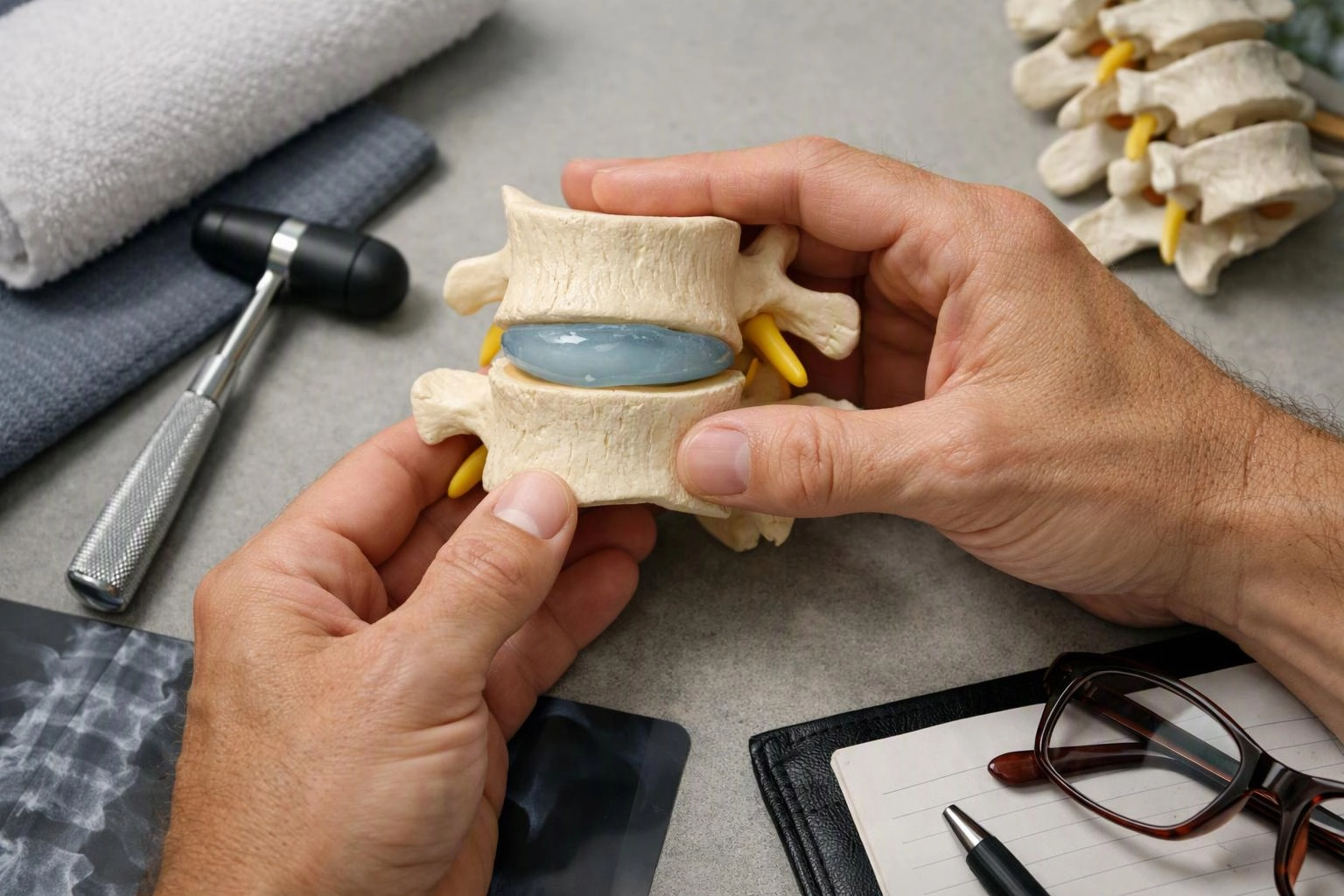
An intervertebral disc works as a flexible connection between neighboring spinal bones. Its outer ring provides structure, while the softer center helps spread forces through the spine. Together, these parts allow the spine to bend, rotate, and bear everyday loads.
Related glossary terms: Disc Herniation, Lumbar Spine, Cervical Spine.
Disc position and condition help explain how movement affects the spine. A disc can become less flexible or develop a damaged area, which may change nearby tissue pressure. Spinal decompression therapy addresses the spine with controlled unloading and repositioning. A clinician considers the affected region, symptoms, movement limits, and available examination findings before selecting an approach.
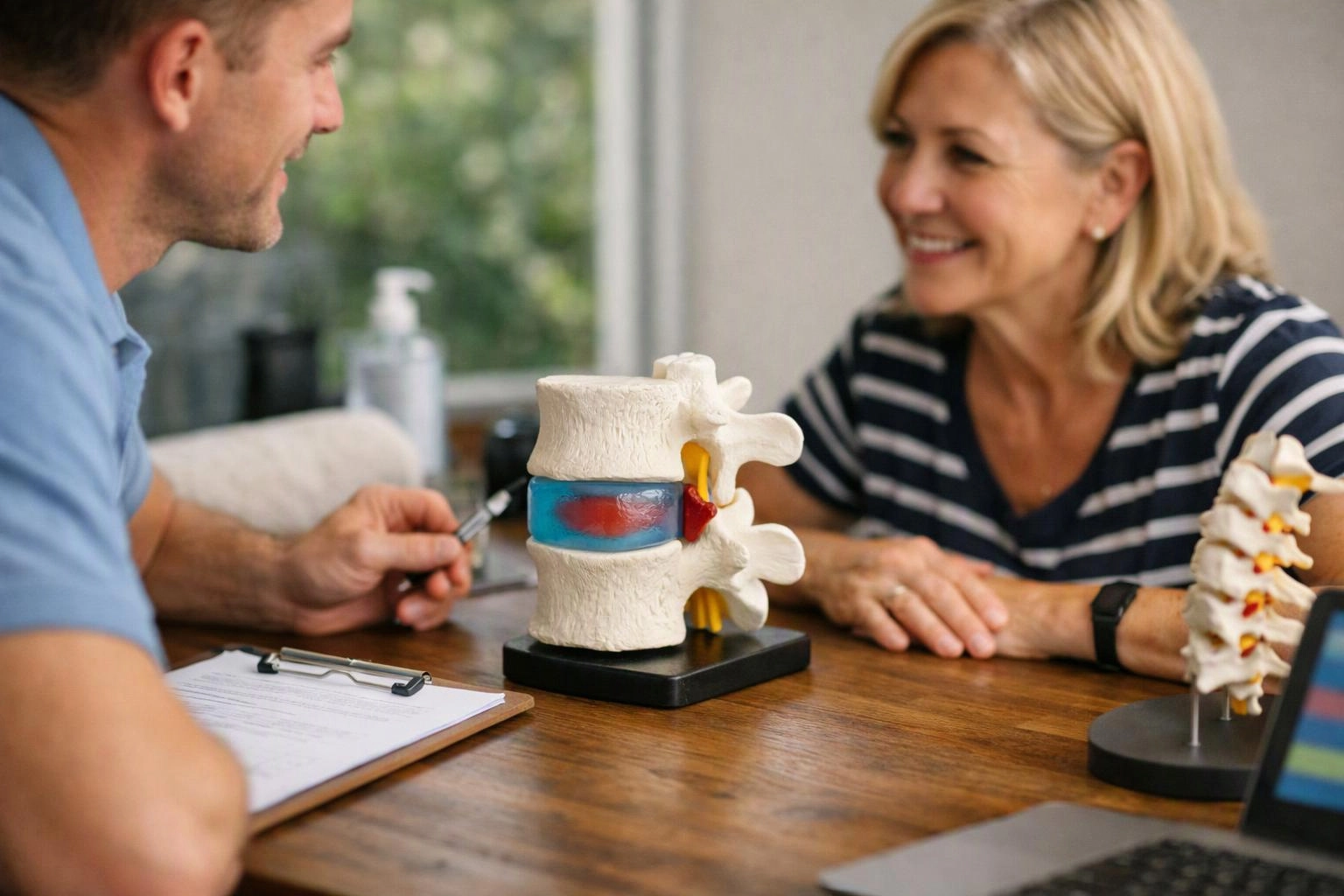
From the Arrowhead Clinic Chiropractor Garden City team
When we review an intervertebral disc in the context of spinal decompression therapy, we consider the spinal region, movement pattern, and reported symptoms together. We also review available examination findings to decide whether the service fits the person’s needs and whether another evaluation may be appropriate.
Intervertebral Disc in Practice: A Real-World Example
A person with lower back discomfort may have symptoms that change during sitting, bending, or walking. During spinal decompression therapy planning, the team considers the lumbar disc region alongside movement findings and the person’s symptom pattern.
Related Services
Related Terms
Disc Herniation
A disc herniation is a condition in which the inner material of an intervertebral disc pushes…
Lumbar Spine
Lumbar Spine is the lower section of the vertebral column between the thoracic spine and pelvis…
Cervical Spine
The cervical spine is the neck portion of the spinal column that supports the head, allows…
Vertebra
A vertebra is one of the individual bones that forms the spinal column. Each vertebra has…
Arrowhead Clinic Chiropractor Garden City
Have Questions About Intervertebral Disc?
Contact Arrowhead Clinic Chiropractor Garden City for practical guidance on Intervertebral Disc and related chiropractor work in Garden City.