
What Is a Muscle Spasm?
A muscle spasm is a sudden, involuntary tightening of muscle fibers that can limit movement and produce pain, stiffness, or a hard, knotted feeling. Spasms may affect the back, neck, or other areas after strain, prolonged positioning, or irritation near a joint or nerve. The tightening may ease quickly or persist.
Quick Facts About Muscle Spasm
Category
Muscle and movement condition
Used for
Describing sudden tightening and restricted motion
Common confusion
Often confused with a muscle strain
Also called
Muscle Cramp
Often discussed with
Back Pain Treatment
Key Takeaways About Muscle Spasm
- Spasms involve involuntary muscle tightening.
- Movement limits and tenderness help distinguish the pattern.
- A spasm is not the same as a muscle strain.
How Muscle Spasm Works
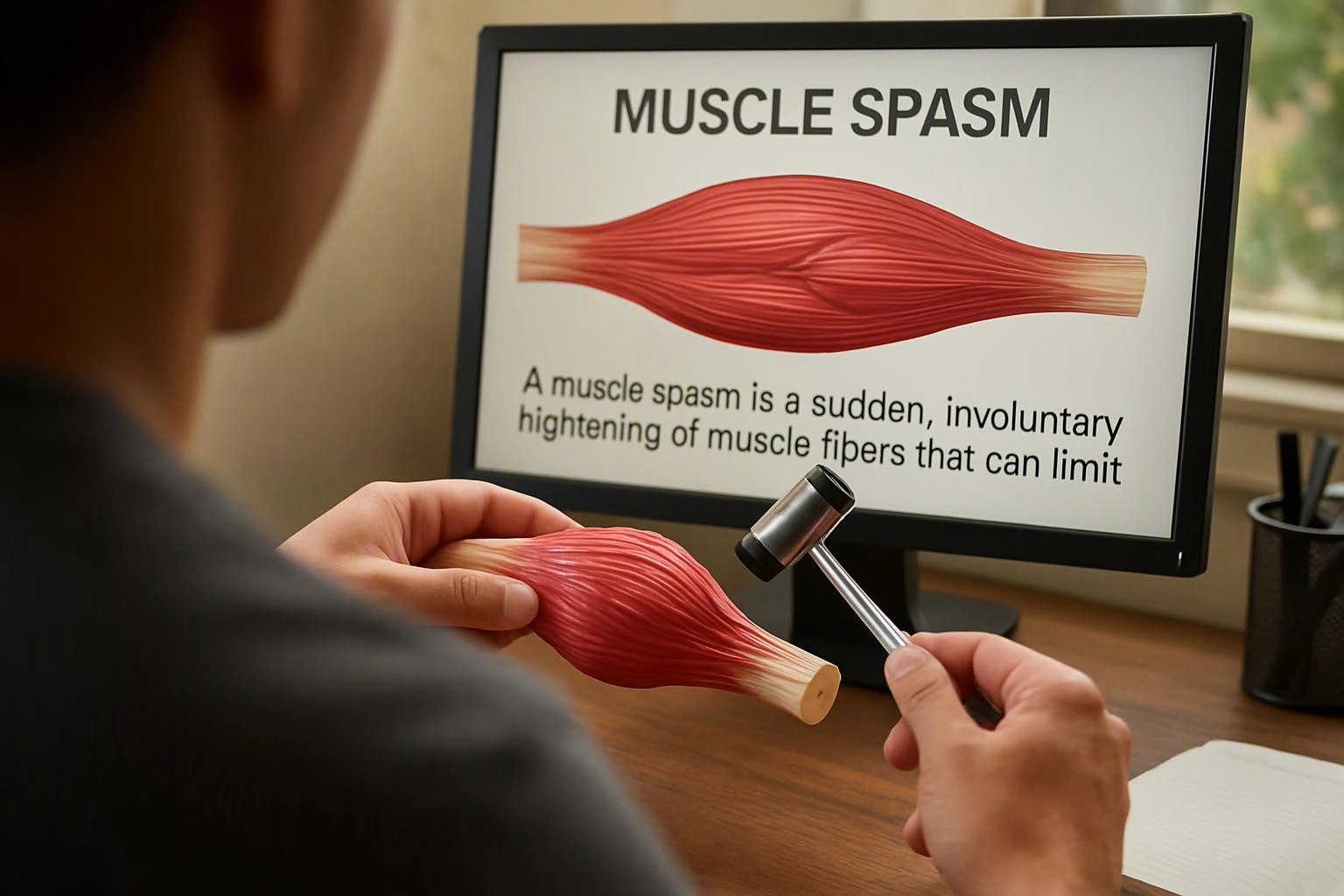
A muscle spasm develops when muscle fibers contract without deliberate control and do not relax normally. The affected area may feel firm or tender, and nearby movement can become limited. In the back, the tightening may occur alongside irritation involving a facet joint or the lumbar spine.
Related glossary terms: Strain, Trigger Point, Lumbar Spine.
Assessment focuses on the location, timing, movement pattern, and related symptoms. A clinician may compare active range of motion with muscle tenderness and observe how the back responds to controlled movement. A spasm describes the muscle response itself, while a strain describes damage or overstretching of muscle tissue. This distinction helps organize the examination and guide the treatment plan.
From the Arrowhead Clinic Chiropractor Garden City team
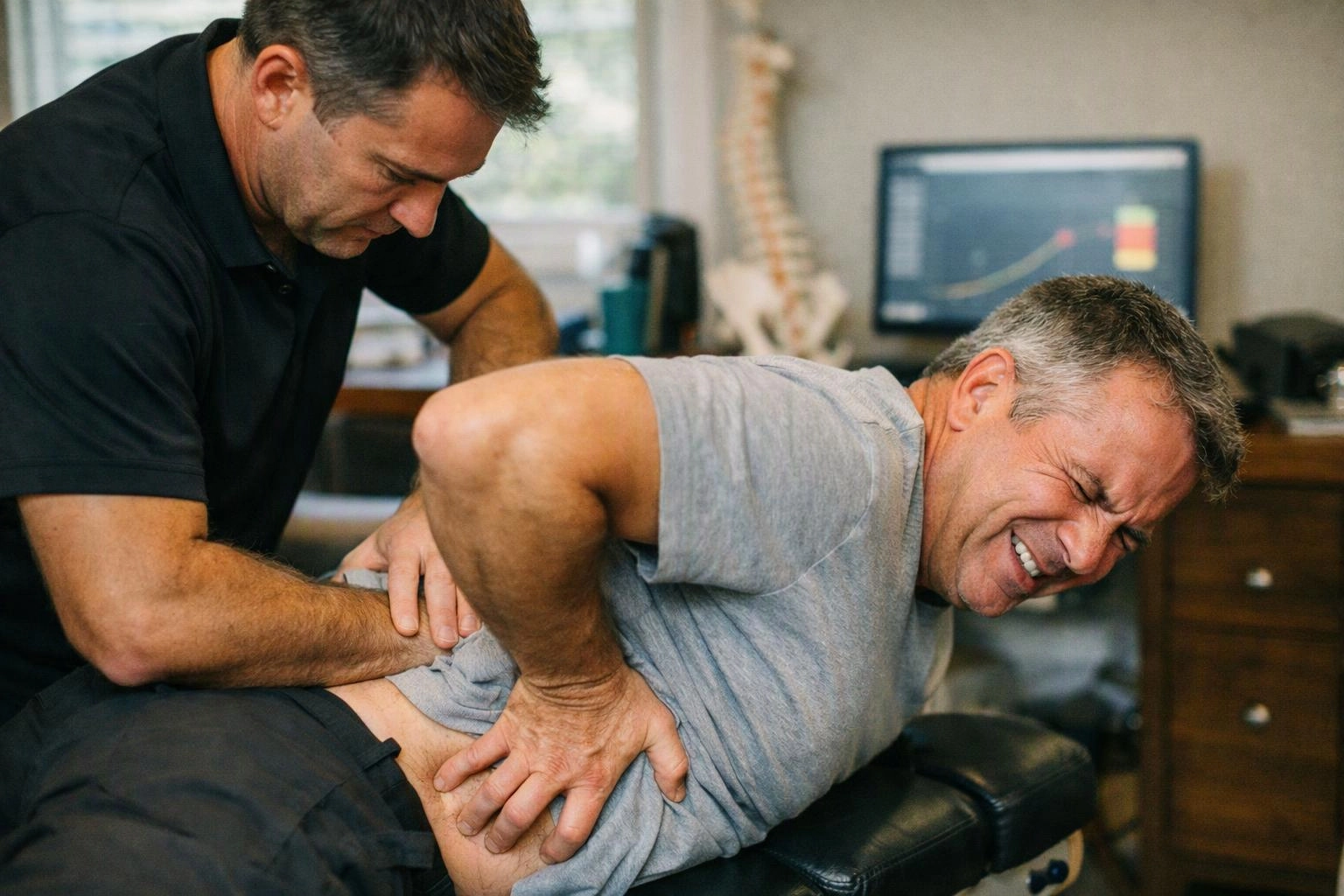
When we assess a muscle spasm during Back Pain Treatment, we review the pain pattern, movement limits, and surrounding joint function. We also check whether the tightening changes with controlled motion or gentle hands-on care. These findings help us separate a muscle response from a broader back condition.
Muscle Spasm in Practice: A Real-World Example
A person develops a tight, painful area in the lower back after lifting and finds that bending feels restricted. During Back Pain Treatment, the muscle spasm is considered alongside nearby joint motion and the person’s reported symptoms.
Related Services
Related Terms
Strain
Strain is an injury to a muscle or tendon caused by overstretching, force, or repeated loading…
Trigger Point
Trigger Point is a sensitive, tense area within a muscle that may produce local discomfort or…
Lumbar Spine
Lumbar Spine is the lower section of the vertebral column between the thoracic spine and pelvis…
Facet Joint
A facet joint is a small, paired joint at the back of the spine that connects…
Arrowhead Clinic Chiropractor Garden City
Have Questions About Muscle Spasm?
Contact Arrowhead Clinic Chiropractor Garden City for practical guidance on Muscle Spasm and related chiropractor work in Garden City.