A Checklist for Recurring Headaches and Migraine Symptoms
A headache and migraine symptoms evaluation checklist should record timing, location, triggers, related symptoms, medicines, and warning signs. Arrowhead Clinic Chiropractor Garden City uses these details to understand headache patterns and decide when medical evaluation should come first.
Written by Dr. NiAmber Harris
Request an Estimate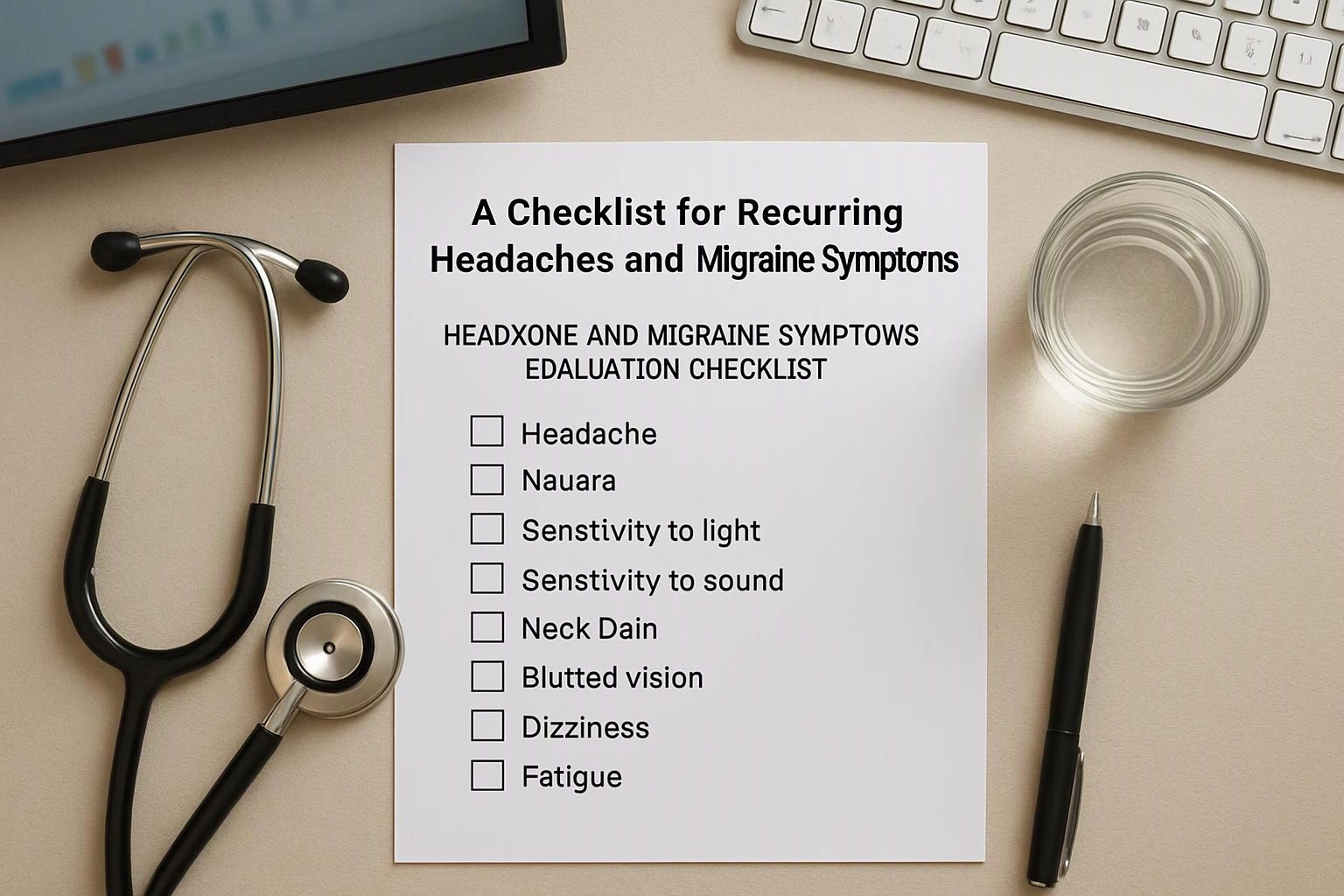
Recurring headaches and migraine symptoms can change from one episode to the next. A clear symptom checklist helps you describe what happened and when it happened.
Headache patterns can point to useful questions about sleep, stress, posture, food, hydration, and neck movement. Our team uses your notes as part of a careful health assessment, while keeping red flags in view.
What This Headache and Migraine Checklist Helps You Track
A headache and migraine checklist organizes symptom details that can guide safer next steps.
A symptom diary turns separate episodes into a clearer record. Write down the headache location, pain quality, pain intensity, and symptom pattern.
Also record possible headache triggers, such as stress, sleep changes, dehydration, missed meals, or movement. Migraine symptoms may include nausea, light sensitivity, sound sensitivity, aura, or vomiting.
Before Care: Record Your Headache Pattern
Before care, a written headache pattern gives our team a more useful starting point.
Use the same notes for each episode when possible. Consistent details make changes easier to notice.
Which Headache Symptoms Need Immediate Medical Attention?
A sudden severe headache or headache with serious warning signs needs urgent medical evaluation before chiropractic care.
Red flags can signal a serious neurological symptom or another health problem. Seek urgent medical attention when a headache feels dangerous, unusual, or rapidly worsens.
Do not delay medical evaluation to schedule chiropractic care when these red flags appear. Our team can review care options after urgent concerns have been assessed.
During Evaluation: Explain Symptoms and Possible Triggers
During evaluation, your headache history helps us connect symptoms with possible triggers and physical factors.
Bring your symptom diary and medication history when you can. Clear notes help our team decide whether chiropractic evaluation fits your needs.
How Neck Symptoms Can Relate to Headaches
Neck stiffness can occur with tension headaches, and neck-related pain can also contribute to some headache patterns.
A tension headache may involve tight neck muscles and pressure around the head. Poor posture can add strain and may create referred pain into the temples, forehead, or back of the head.
A cervicogenic headache is a headache linked to a problem or irritation in the neck. We assess neck movement, muscle tension, posture, and related symptoms before planning care.
Headache Patterns That May Need Different Next Steps
Different headache patterns may call for different next steps, so the symptom pattern matters.
The table below offers a starting point, not a diagnosis. Red flags or a new pattern require medical evaluation.
| Pattern | Common features to record | Possible next step |
|---|---|---|
| Tension headache | Pressure, muscle tension, stress, or posture changes | Review posture, neck factors, and symptom changes |
| Migraine | Throbbing pain, nausea, light sensitivity, sound sensitivity, or aura | Review triggers and consider medical evaluation when needed |
| Cervicogenic headache | Neck pain, limited movement, or pain referred from the neck | Assess neck movement, posture, and muscle tension |
| Cluster headache | Severe one-sided pain with unusual eye or nasal symptoms | Seek medical evaluation for diagnosis and treatment |
| Secondary headache | New, changing, sudden, or concerning symptoms | Prioritize medical evaluation, especially with red flags |
We use this comparison to guide questions, not to label your condition without an evaluation. A changing headache pattern deserves careful review.
After Care: Track Changes and Prepare Follow-Up Questions
After care, tracking changes shows whether symptoms and daily activities are improving, staying the same, or worsening.
Keep your notes simple and bring them to follow-up care. Our team can use your updates to adjust the plan or recommend medical referral.
When Should You Consider Chiropractic Care for Headaches?
You can consider chiropractic care when recurring headaches appear related to musculoskeletal factors and urgent warning signs have been ruled out.
Chiropractic care may fit people with tension headache features, neck stiffness, posture strain, or a neck-related headache. We begin with a clinical evaluation and review of your headache history.
Chiropractic care does not replace medical evaluation for sudden severe headache, neurological symptoms, fever, head injury, or major vision changes. Our team recommends medical referral when the symptom pattern calls for it.
For more information about our approach, visit our Migraine Treatment service page.
How Arrowhead Clinic Chiropractor Garden City Uses Your Checklist
Our team reviews your headache history, related symptoms, and neck factors to plan appropriate migraine treatment or recommend medical evaluation.
We start with a symptom review and ask how headaches affect movement, sleep, work, and daily activities. We then assess neck movement, posture, and muscle tension when those factors may relate to your symptoms.
Care planning depends on your findings and safety screen. We explain the next step clearly and help you understand when medical referral comes first.
Questions About Recurring Headaches and Migraine Symptoms
Can a headache diary help identify migraine triggers?
Yes, a headache diary can help identify patterns linked with migraine triggers. Arrowhead Clinic Chiropractor Garden City reviews timing, sleep, hydration, meals, stress, and related symptoms with you.
Can dehydration or missed meals contribute to recurring headaches?
Yes, dehydration or missed meals can contribute to headaches for some people. Record these details in your symptom diary so your care team can review the pattern.
Can migraine symptoms happen without head pain?
Yes, migraine symptoms can sometimes occur without clear head pain. Aura, nausea, light sensitivity, and sound sensitivity still deserve careful medical review.
What information should I bring to a headache evaluation?
Bring your symptom diary, headache history, medication use, possible triggers, related symptoms, and questions about follow-up care. Include details about neck stiffness, posture, movement, sleep, hydration, and food when they seem connected.
Use your checklist when you contact Arrowhead Clinic Chiropractor Garden City so our team can understand your symptoms and discuss the next safe step.
Get a Free EstimateAuthor: Dr. NiAmber Harris