A Parent’s Checklist for Evaluating a Child’s Back or Neck Complaint
A parent’s checklist for evaluating a child’s back or neck complaint helps families record symptoms, identify warning signs, and ask focused questions about pediatric chiropractic care; Arrowhead Clinic Chiropractor Garden City uses the child’s history, symptoms, and examination findings to guide next steps.
Request an Estimate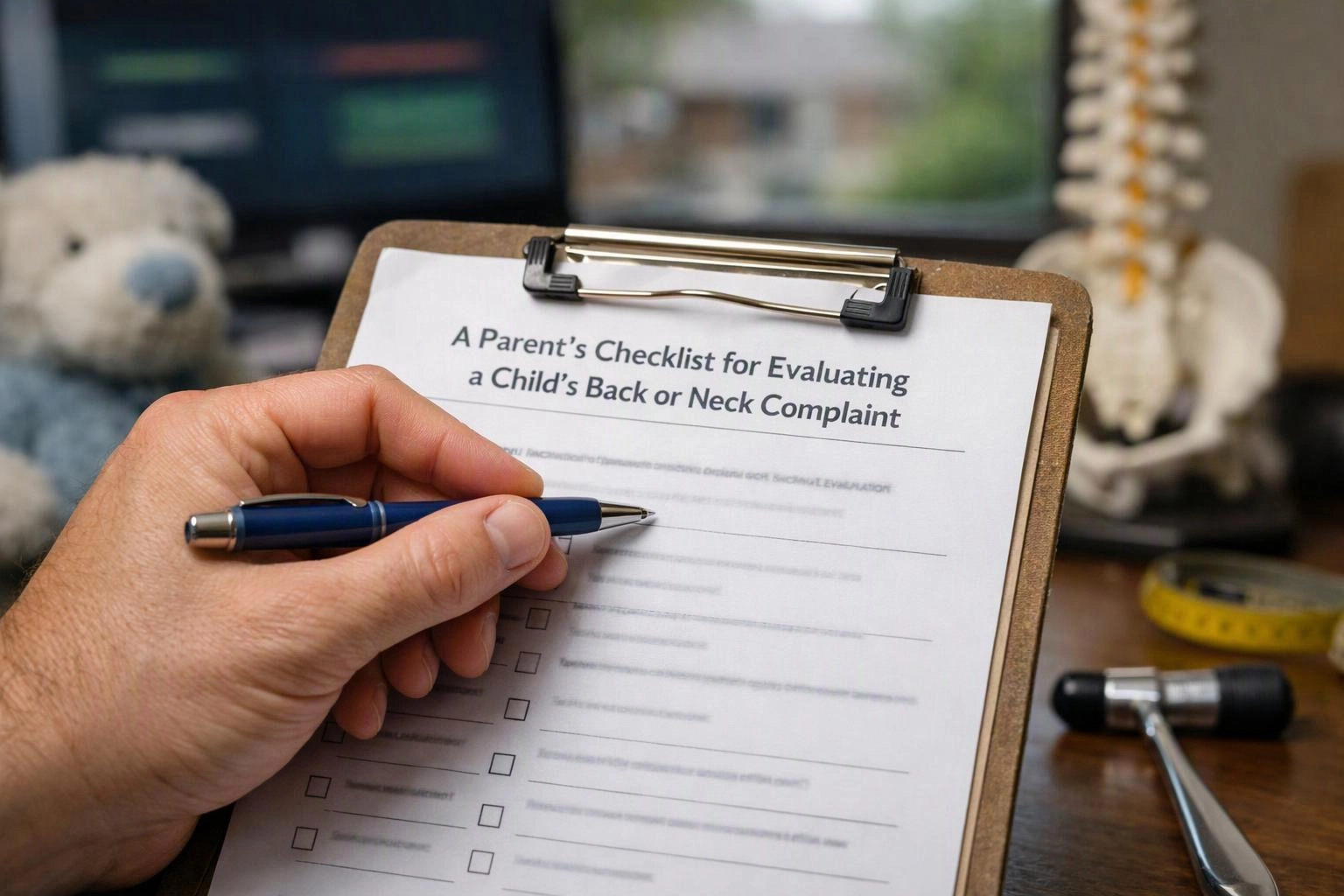
Before the Pediatric Chiropractic Evaluation
Preparing a clear symptom history helps us understand the child’s back complaint or neck complaint. Write down what the child feels, what affects the symptoms, and what you have observed at home.
Bring relevant medical details and describe the injury mechanism in simple terms. These notes help connect the child’s symptoms with the health history and guide the evaluation.
Parent observations can reveal symptom progression that a child may not explain during a visit. Bring written notes, medication information, and questions so the conversation stays focused.
What a Pediatric Chiropractic Evaluation Should Address
Pediatric chiropractic evaluation should connect the child’s symptoms with their history and examination findings while identifying situations that need medical assessment or referral.
We review the health history, injury history, symptom progression, and activity limits. Our physical examination may consider posture, range of motion, movement, and signs that require a medical referral.
A pediatric chiropractor should explain what the findings may mean in clear language. The evaluation should also address neurological symptoms and whether the child needs clinical assessment from another healthcare professional before care continues.
Our team uses the available information to decide whether pediatric chiropractic care fits the child’s situation. We do not treat a symptom in isolation, and we explain when medical attention is the safer next step.
During the Evaluation: Questions Parents Should Ask
Parents should leave the evaluation understanding the findings, the clinical reasoning, and the proposed next step. The questions below can help you take part in an informed conversation about care.
We welcome parent questions about examination findings, possible causes, and the role of a chiropractic adjustment. Clear communication supports parent consent and shared decision-making.
Parents can pause the discussion whenever an explanation is unclear. Our team explains the reason for each recommended step and records concerns that may affect the care plan.
When a Child’s Symptoms Need Prompt Medical Attention
A child’s back or neck complaint needs prompt medical attention when it follows a serious injury or includes neurological changes, difficulty walking, bowel or bladder changes, or concerning illness symptoms.
Red flags can signal a problem that needs medical assessment before chiropractic care. Contact appropriate medical services promptly when any of these warning signs appear.
We want parents to share red flag symptoms before an evaluation begins. Our team can help explain when a medical referral is needed, but urgent symptoms require prompt medical attention.
After the Evaluation: Review the Proposed Care
Reviewing the proposed care plan helps parents decide whether the recommendations match the child’s needs and family goals. Ask for plain-language explanations before giving parent consent.
Our team connects treatment goals with the child’s symptoms and examination findings. We also explain how follow-up assessment, home guidance, and symptom monitoring fit into the plan.
Parents should feel comfortable asking for more explanation before care begins. We keep communication open so the plan can respond to new symptoms or changing activity limits.
Is Chiropractic Care Appropriate for Every Child?
No, pediatric chiropractic care is not appropriate for every child; suitability depends on the child’s symptoms, health history, examination findings, and whether medical evaluation is needed first.
A child’s symptom severity, injury history, and neurological symptoms can affect the referral decision. Contraindications or signs of serious illness may require medical evaluation before any chiropractic approach is considered.
We review the child’s health history and physical examination findings before discussing care. Our team explains the options, answers parent questions, and seeks informed consent when care is appropriate.
How Parents Can Prepare for the Next Conversation
A symptom diary gives parents a clear record to share during the next conversation. Include pain location, symptom progression, activity limitations, and changes noticed after rest or normal activity.
Write down parent concerns, care goals, and questions for the chiropractor before the visit. Shared decision-making works best when the family understands the findings and has time to discuss the care plan.
Arrowhead Clinic Chiropractor Garden City uses these details to guide the conversation about pediatric chiropractic care. You can bring the diary to a follow-up assessment and update it when symptoms change.
Questions About a Child’s Back or Neck Evaluation
What information should I bring to a pediatric chiropractor?
Arrowhead Clinic Chiropractor Garden City recommends bringing the child’s symptom history, injury history, medical history, medication details, and parent observations. Notes about pain location, activity limitations, symptom progression, and red flag symptoms can make the evaluation more focused.
Should my child see a pediatrician before a chiropractor for back or neck pain?
A child should receive medical attention first when back or neck pain follows a serious injury or includes weakness, numbness, walking difficulty, bowel or bladder changes, fever, or other concerning illness symptoms. We review the child’s history and findings and explain when medical referral is needed before care.
What should I ask about a chiropractic adjustment for my child?
Ask whether the adjustment fits the child’s symptoms and examination findings, what it is intended to address, what the care plan includes, and how progress will be assessed. Parents should also ask about alternatives, home guidance, follow-up care, and informed consent.
How can I tell whether my child’s symptoms are getting worse?
Track changes in pain location, movement, walking, activity, sleep, strength, sensation, and general illness symptoms. New weakness, numbness, walking difficulty, bowel or bladder changes, fever, or severe pain after an injury needs prompt medical attention.
Bring your questions and symptom notes so we can discuss the child’s back or neck complaint clearly. Arrowhead Clinic Chiropractor Garden City can review the history, explain the evaluation findings, and help you understand the next step.
Talk with our team about your child’s evaluation