Spinal Decompression Therapy: How It Works and What to Consider
Spinal decompression therapy is a controlled, non-surgical approach that applies targeted traction to reduce spinal loading for selected conditions. Arrowhead Clinic Chiropractor Garden City evaluates your symptoms and health history to determine whether decompression therapy, chiropractic care, or both fit your needs.
Request an EstimateWhat Is Spinal Decompression Therapy?
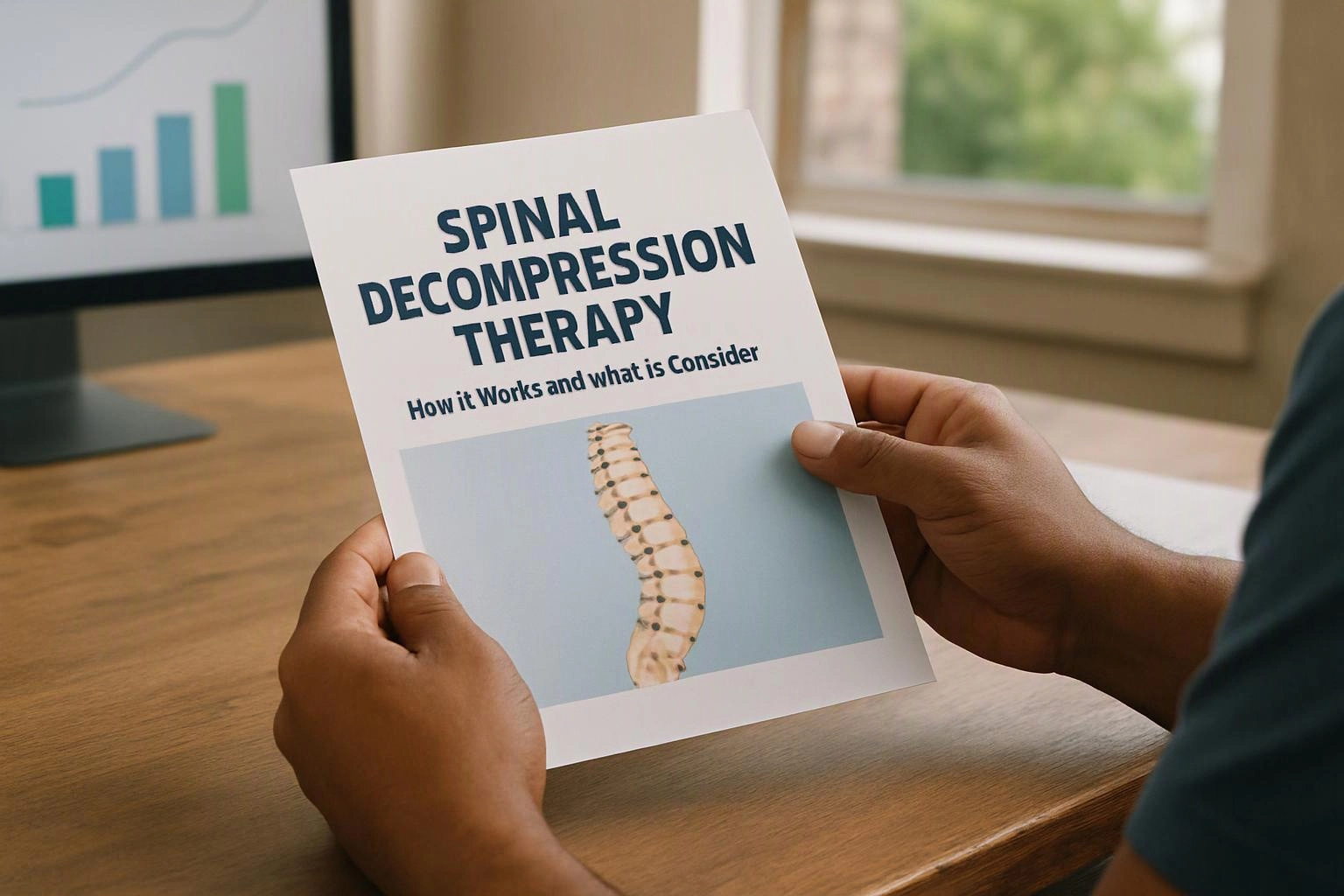
Spinal decompression therapy is a controlled traction-based treatment that changes how forces are applied to the spine during a session.
The treatment uses mechanical traction to create a guided form of spinal unloading. This approach may reduce stress on selected areas of the spine and may support comfort when symptoms involve the intervertebral discs or nearby joints.
Spinal decompression therapy is a form of conservative spine care. It does not replace a clinical assessment, and the right approach depends on your symptoms, health history, and treatment goals.
How Does Spinal Decompression Therapy Work?
Spinal decompression therapy works through an assessment-led sequence of positioning, controlled spinal unloading, and response monitoring.
What Does Spinal Decompression Therapy Feel Like?
Spinal decompression therapy commonly feels like a controlled pulling or unloading sensation, and treatment should be adjusted when discomfort is not acceptable.
Some people notice a gentle traction sensation in the treated area. Muscle response can vary, so our team pays attention to changes in comfort, tension, and symptoms during the session.
Communication during treatment matters. Tell us if the traction feels sharp, uncomfortable, or different from what we explained so we can reassess the setup and adjust the treatment when appropriate.
Can Spinal Decompression Help Sciatica?
Spinal decompression therapy may help some people with sciatica when symptoms are related to spinal loading or irritation, but suitability depends on the cause and clinical findings.
Sciatica involves symptoms that follow the path of the sciatic nerve. Radiating leg pain can begin in the lumbar spine and extend into the leg when nerve irritation is present.
We assess the location, pattern, and behavior of your symptoms before recommending care. Our clinical assessment helps us decide whether decompression, a chiropractic adjustment, another conservative option, or a combination fits the likely source of your symptoms.
Spinal Decompression Therapy Compared With a Chiropractic Adjustment
Spinal decompression therapy and a chiropractic adjustment are different treatments that can address different mechanical features of a spine-related problem.
| Treatment | Primary method | Common treatment goal | How we choose it |
|---|---|---|---|
| Spinal decompression therapy | Controlled traction and spinal unloading | Reduce selected spinal loading and support comfort | We consider symptoms, health history, and tolerance for traction |
| Chiropractic adjustment | A directed manual or instrument-assisted movement of a spinal joint | Support joint movement and spinal mobility | We consider restricted spinal motion, examination findings, and treatment goals |
Neither option is automatically the right choice for every person. We use clinical assessment to match the treatment method to the mechanical features and symptom response we find.
When Might Decompression Therapy and Chiropractic Adjustments Be Used Together?
Spinal decompression therapy and a chiropractic adjustment may be used together when different parts of the same problem need attention.
How Can These Two Chiropractic Treatments Work Together?
These two chiropractic treatments work together when our team sequences them around your findings, response, and care goals.
Who Should Consider Spinal Decompression Therapy?
People with selected spine-related symptoms may consider spinal decompression therapy after an individualized assessment determines that controlled traction is appropriate.
We review your health history, symptom pattern, medical screening needs, and treatment goals. This review helps us identify possible contraindications and decide whether traction therapy is suitable.
People with back pain, disc-related symptoms, or radiating leg pain may benefit from an evaluation, but symptoms alone do not determine the right treatment. Our team uses examination findings and your treatment response to guide the care plan.
What Should You Consider Before Starting Treatment?
Before starting spinal decompression therapy, consider your diagnosis, health history, symptom progression, treatment goals, and care alternatives.
Share changes in your symptoms and any relevant medical information during your consultation. Symptom progression can change whether controlled traction remains appropriate.
We also discuss the expected response and other conservative options. A clear treatment plan should reflect your clinical findings, comfort, and goals.
How We Evaluate Spinal Decompression Therapy
Arrowhead Clinic Chiropractor Garden City evaluates your symptoms, health history, and spinal findings before recommending whether Spinal Decompression Therapy belongs in your care plan.
During the patient consultation, we discuss what you feel, when symptoms began, and how movement or position affects them. Our spinal examination helps us consider spinal loading, joint movement, muscle response, and possible nerve irritation.
We then explain the care options that fit the findings. If decompression is appropriate, we plan treatment positioning, monitor symptom response, and adjust the treatment plan as your needs change.
Questions About Spinal Decompression Therapy
Is spinal decompression therapy safe for everyone?
Spinal decompression therapy is not appropriate for everyone, so Arrowhead Clinic Chiropractor Garden City screens your health history, symptoms, and clinical findings before recommending it.
Can spinal decompression therapy be used for neck pain?
Yes, spinal decompression therapy may be considered for selected neck pain patterns after an assessment determines that cervical decompression is appropriate.
What conditions may make spinal decompression therapy unsuitable?
Spinal decompression therapy may be unsuitable when health history, medical screening, symptom behavior, or examination findings indicate that controlled traction could be unsafe or poorly tolerated.
Should I stop treatment if spinal decompression increases my symptoms?
Yes, tell our team immediately if spinal decompression increases your symptoms so we can stop or adjust the session and reassess your care plan.
Arrowhead Clinic Chiropractor Garden City can review your symptoms and discuss whether spinal decompression therapy, chiropractic care, or both fit your needs.
Get a Free Estimate