
What Is Kinesiology Tape?
Kinesiology Tape is an elastic adhesive strip placed on the skin to provide light support and sensory input during movement. The tape follows the body’s contours and allows normal joint motion. Clinicians may apply it around muscles, tendons, or joints during sports injury treatment. Kinesiology tape does not replace assessment or correct an underlying injury.
Quick Facts About Kinesiology Tape
Category
Flexible external support
Used for
Movement support during sports injury care
Common confusion
Not rigid immobilization tape
Also called
K Tape, KT Tape
Often discussed with
Sports Injury Treatment
Key Takeaways About Kinesiology Tape
- Flexible tape allows movement while offering light external support.
- Application follows the body area and the activity involved.
- Kinesiology tape is not the same as rigid athletic tape.
How Kinesiology Tape Works

Kinesiology Tape works through flexible adhesive contact with the skin. Its stretch and placement can provide a light mechanical cue while a person moves. The tape does not hold a joint rigidly, so the treated area can continue through a planned range of motion. The response can vary with the body area, skin, activity, and application method.
Related glossary terms: Sprain, Strain, Range Of Motion.
During sports injury treatment, a clinician may place tape along a muscle or near a joint to support movement awareness. Application begins with an assessment of the activity and the area involved. The clinician then checks whether the tape stays secure during movement and whether the person can perform the intended task comfortably. Kinesiology tape serves as one part of care, not a substitute for examining the injury.
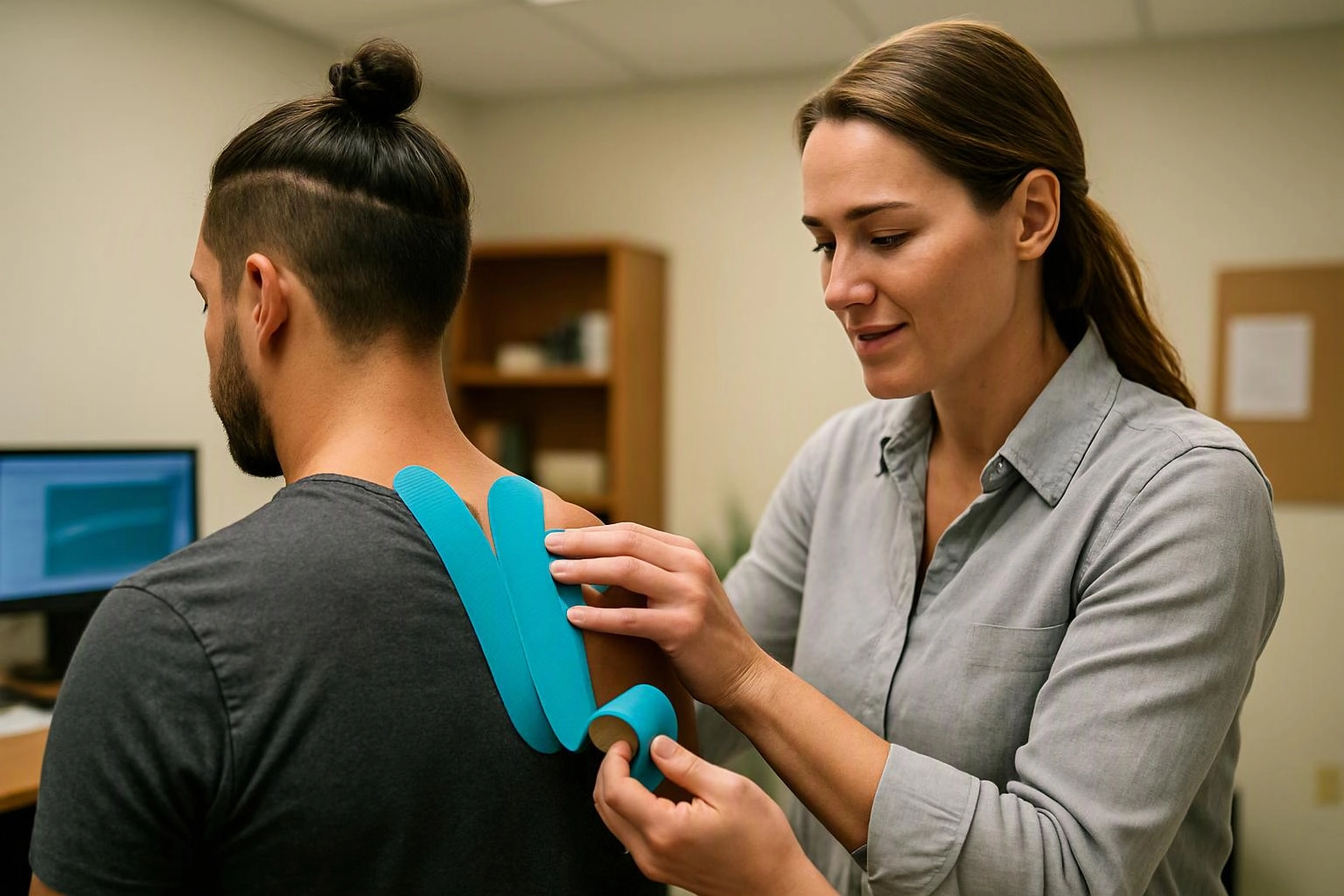
From the Arrowhead Clinic Chiropractor Garden City team
When we apply Kinesiology Tape, we first review the movement that causes difficulty and inspect the skin in the planned area. We choose an application pattern that fits the activity, then check comfort and movement after placement. Our team treats the tape as a short-term support tool within Sports Injury Treatment.
Kinesiology Tape in Practice: A Real-World Example
A recreational runner with mild knee discomfort may receive Kinesiology Tape along the muscles near the knee during a sports injury visit. The clinician checks the tape during walking and a sport-specific movement, then adjusts the application if it limits comfortable motion.
Related Services
Related Terms
Sprain
A sprain is an injury to a ligament, the tough band of tissue that connects bones…
Strain
Strain is an injury to a muscle or tendon caused by overstretching, force, or repeated loading…
Range Of Motion
Range Of Motion is the amount and direction a joint can move through its available movement…
Ligament
A ligament is a strong band of connective tissue that joins one bone to another and…
Arrowhead Clinic Chiropractor Garden City
Have Questions About Kinesiology Tape?
Contact Arrowhead Clinic Chiropractor Garden City for practical guidance on Kinesiology Tape and related chiropractor work in Garden City.