
What Is the Temporomandibular Joint?
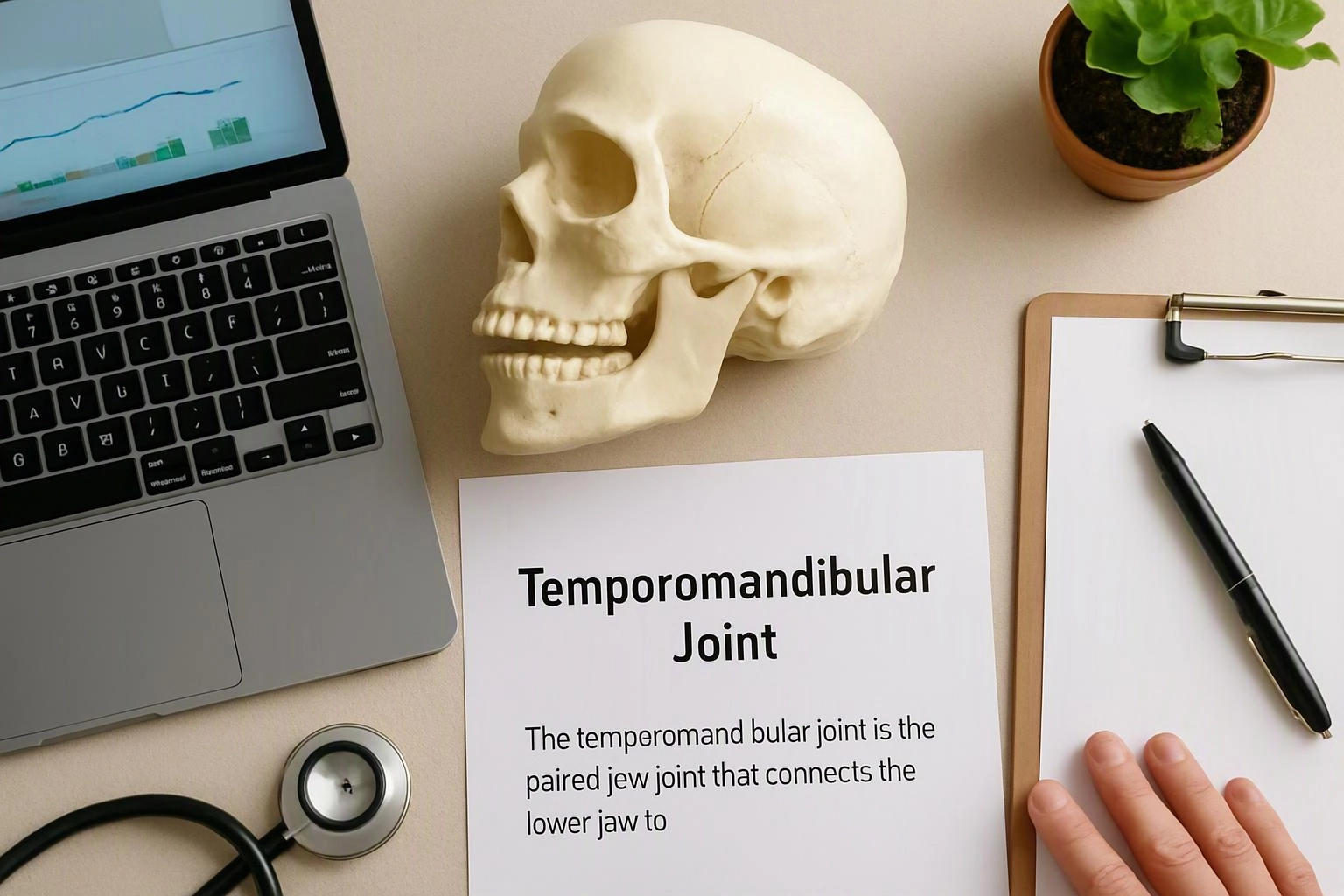
The temporomandibular joint is the paired jaw joint that connects the lower jaw to the skull near each ear. Each joint supports opening, closing, speaking, chewing, and other jaw movements. Muscles, ligaments, cartilage, and the joint surfaces work together to guide smooth motion between the jaw and skull.
Quick Facts About Temporomandibular Joint
Category
Paired synovial jaw joint
Used for
Jaw opening, closing, and side-to-side motion
Common confusion
TMJ can mean the joint or a related disorder
Also called
Jaw Joint, TMJ
Often discussed with
TMJ Treatment
Key Takeaways About Temporomandibular Joint
- The jaw has a temporomandibular joint on each side.
- Jaw motion depends on joint surfaces, muscles, ligaments, and cartilage.
- TMJ refers to the joint, not always a jaw disorder.
How Temporomandibular Joint Works
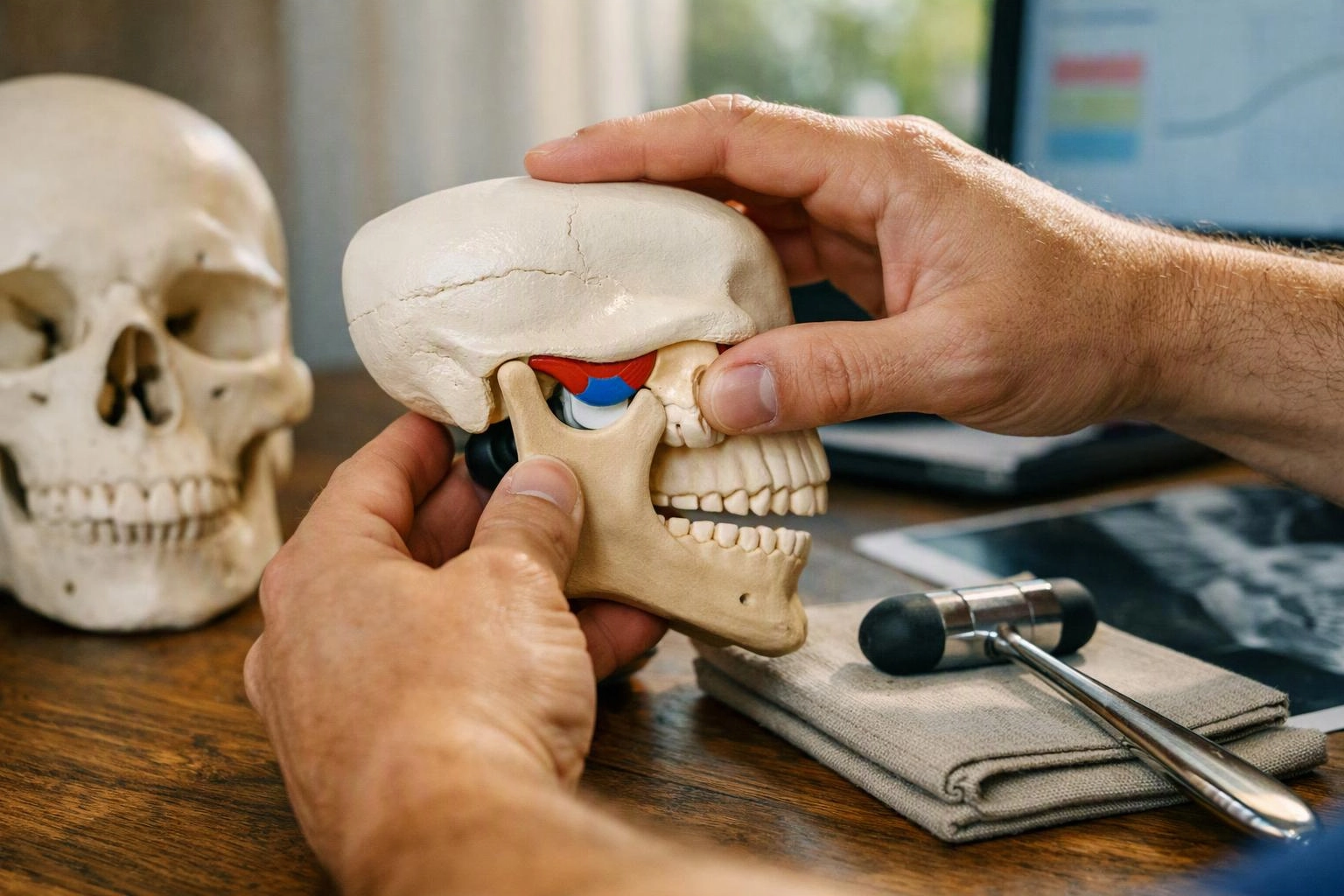
The temporomandibular joint works as a paired hinge and sliding joint. Each side includes a rounded part of the lower jaw, a socket in the skull, a small disc, and supporting soft tissues. The disc helps the jaw move smoothly as the mouth opens and closes.
Related glossary terms: Joint Mobilization, Manual Therapy, Muscle Spasm.
Jaw muscles create the force that moves the joints. The joints also coordinate with the teeth, neck, and facial muscles during chewing and speech. Jaw muscles may affect movement when they remain tense or when jaw motion becomes uneven. A clinical assessment may consider tenderness, movement, sounds, and how the upper and lower teeth meet. Range of motion describes how far and in which directions the jaw moves.
From the Arrowhead Clinic Chiropractor Garden City team
When we assess the temporomandibular joint, we observe jaw opening, closing, and side-to-side movement. We also check nearby muscles and the neck because jaw symptoms may involve more than the joint itself. Our team uses these findings to guide care within TMJ Treatment.
Temporomandibular Joint in Practice: A Real-World Example
A person with jaw tightness may notice discomfort while chewing or difficulty opening the mouth comfortably. During TMJ Treatment, the evaluation may include jaw movement and the surrounding facial and neck muscles.
Related Services
Related Terms
Joint Mobilization
Joint Mobilization is a hands-on manual therapy technique that applies controlled movement to a joint without…
Manual Therapy
Manual Therapy is a hands-on treatment approach that uses skilled touch to assess and address muscles…
Muscle Spasm
A muscle spasm is a sudden, involuntary tightening of muscle fibers that can limit movement and…
Range Of Motion
Range Of Motion is the amount and direction a joint can move through its available movement…
Arrowhead Clinic Chiropractor Garden City
Have Questions About Temporomandibular Joint?
Contact Arrowhead Clinic Chiropractor Garden City for practical guidance on Temporomandibular Joint and related chiropractor work in Garden City.