
What Is An Axial Load?
An axial load is a force directed along the lengthwise axis of a body part, such as the spine, leg, or arm. In sports injury care, axial loading describes how compression travels through connected bones and joints during activities like landing, lifting, or bracing. The body may absorb, transfer, or resist that force.
Quick Facts About Axial Load
Category
Biomechanical force
Used for
Describing compression during movement
Applies to
Spine, limbs, and joints
Common confusion
Axial load is not rotational force
Also called
Spinal Loading, Axial loading
Often discussed with
Sports Injury Treatment
Key Takeaways About Axial Load
- The force follows a body part’s lengthwise axis.
- Landing and lifting can transmit axial load through the spine or limbs.
- Axial load is not the same as twisting or sliding force.
How Axial Load Works
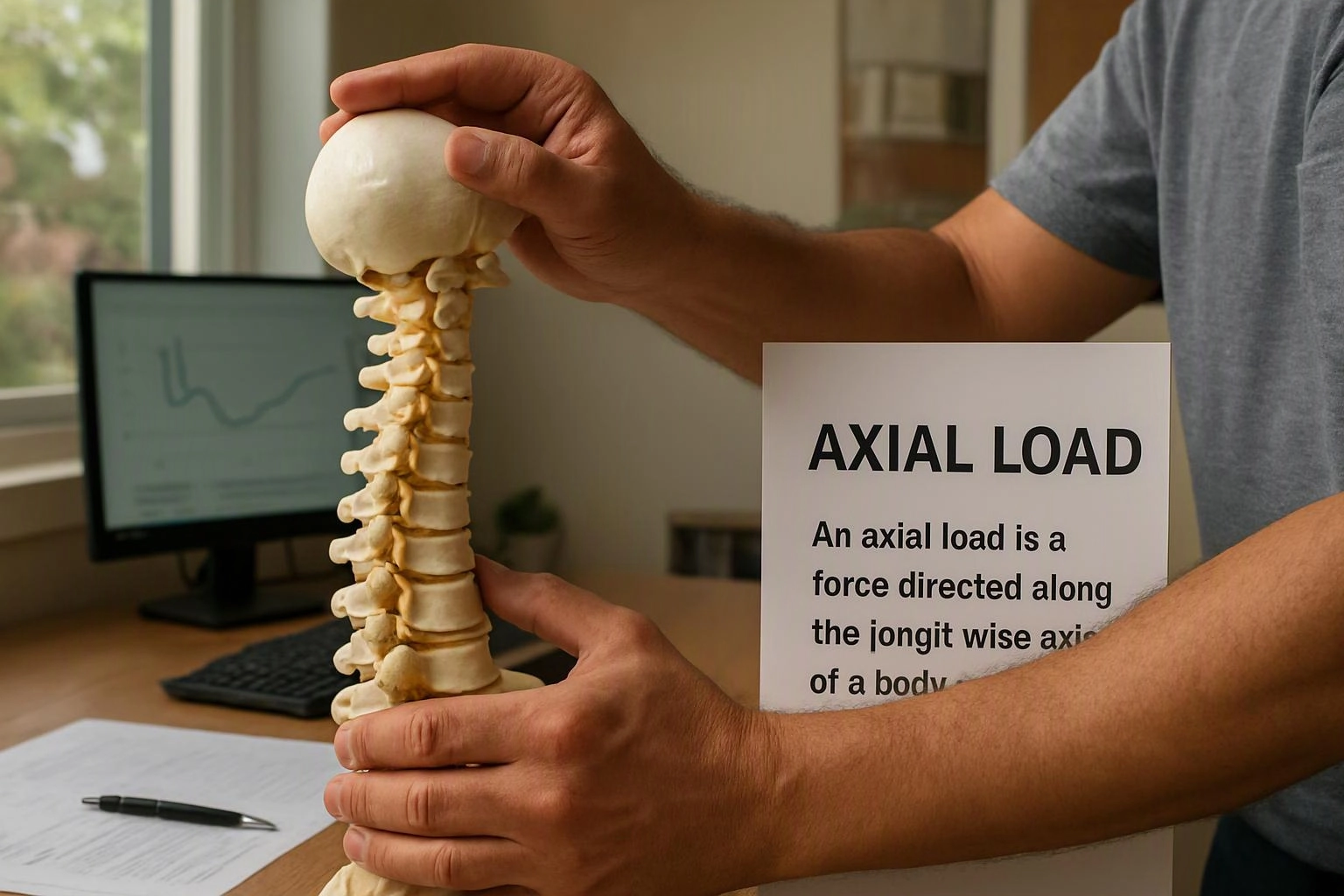
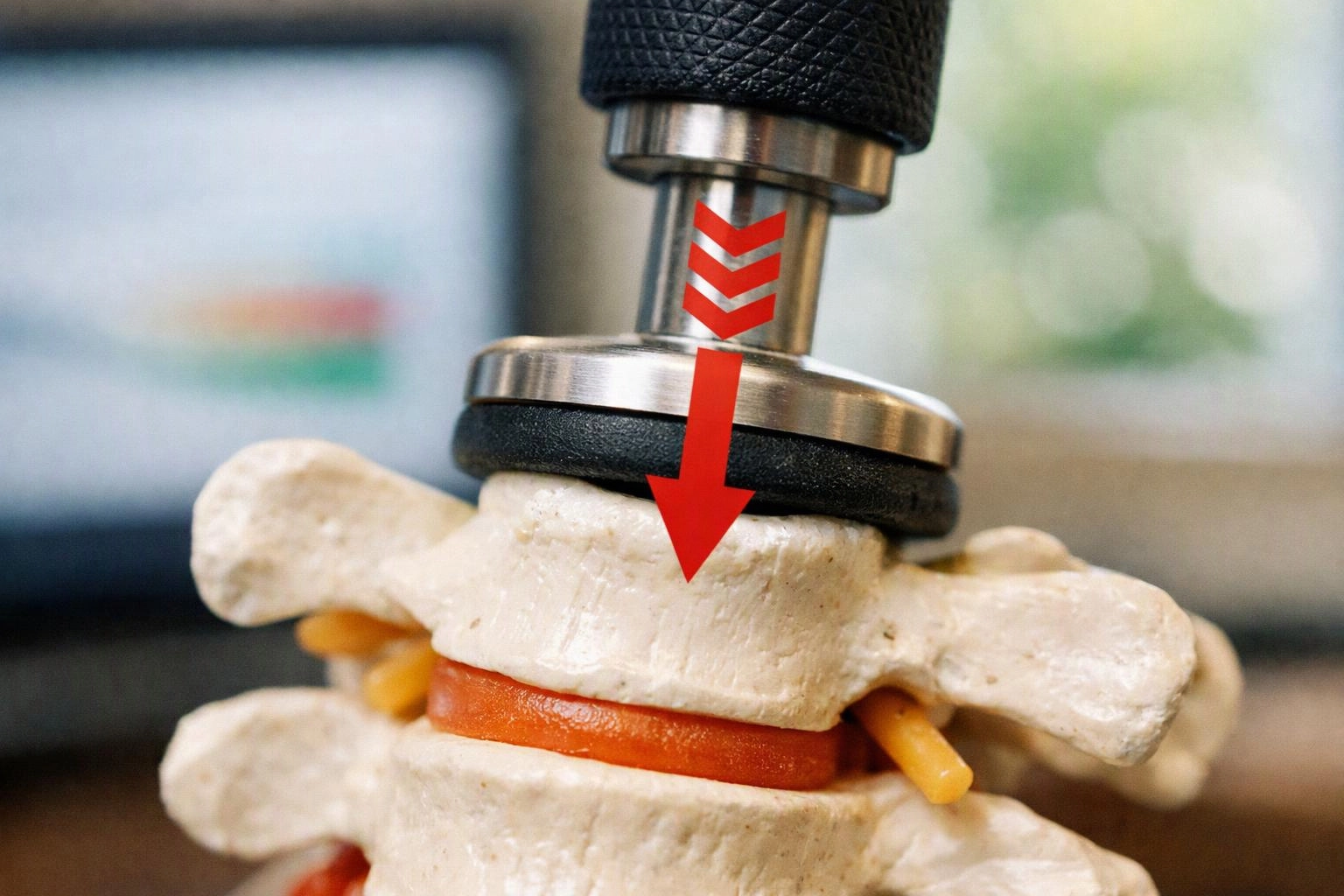
Axial load moves along the central line of a body structure. In the spine, the vertebrae and intervertebral discs share the compressive force created by standing, jumping, or carrying equipment. Muscles and connective tissues also help control how that force travels through the body.
Related glossary terms: Intervertebral Disc, Vertebra, Lumbar Spine.
Sports injury assessment considers the activity, body position, and movement pattern that produced the load. A landing with the knees and hips bent spreads force across several structures. A stiff landing can send more compression toward the spine or a lower-limb joint. Clinicians compare movement, range of motion, and reported symptoms to understand how axial loading relates to the injury.
From the Arrowhead Clinic Chiropractor Garden City team
When we assess a sports injury, we examine how the athlete’s posture and movement direct axial load through the spine or limbs. We consider the activity that triggered symptoms, then check related joint motion and muscle control. Our findings help distinguish compression from twisting, bending, or sliding forces.
Axial Load in Practice: A Real-World Example
A basketball player lands after a rebound with the feet, knees, hips, and spine aligned. The landing sends axial load upward through the legs and pelvis, while controlled bending helps distribute the force across those structures.
Related Services
Related Terms
Intervertebral Disc
An intervertebral disc is a flexible pad between neighboring vertebrae that helps separate the spinal bones…
Vertebra
A vertebra is one of the individual bones that forms the spinal column. Each vertebra has…
Lumbar Spine
Lumbar Spine is the lower section of the vertebral column between the thoracic spine and pelvis…
Range Of Motion
Range Of Motion is the amount and direction a joint can move through its available movement…
Arrowhead Clinic Chiropractor Garden City
Have Questions About Axial Load?
Contact Arrowhead Clinic Chiropractor Garden City for practical guidance on Axial Load and related chiropractor work in Garden City.